
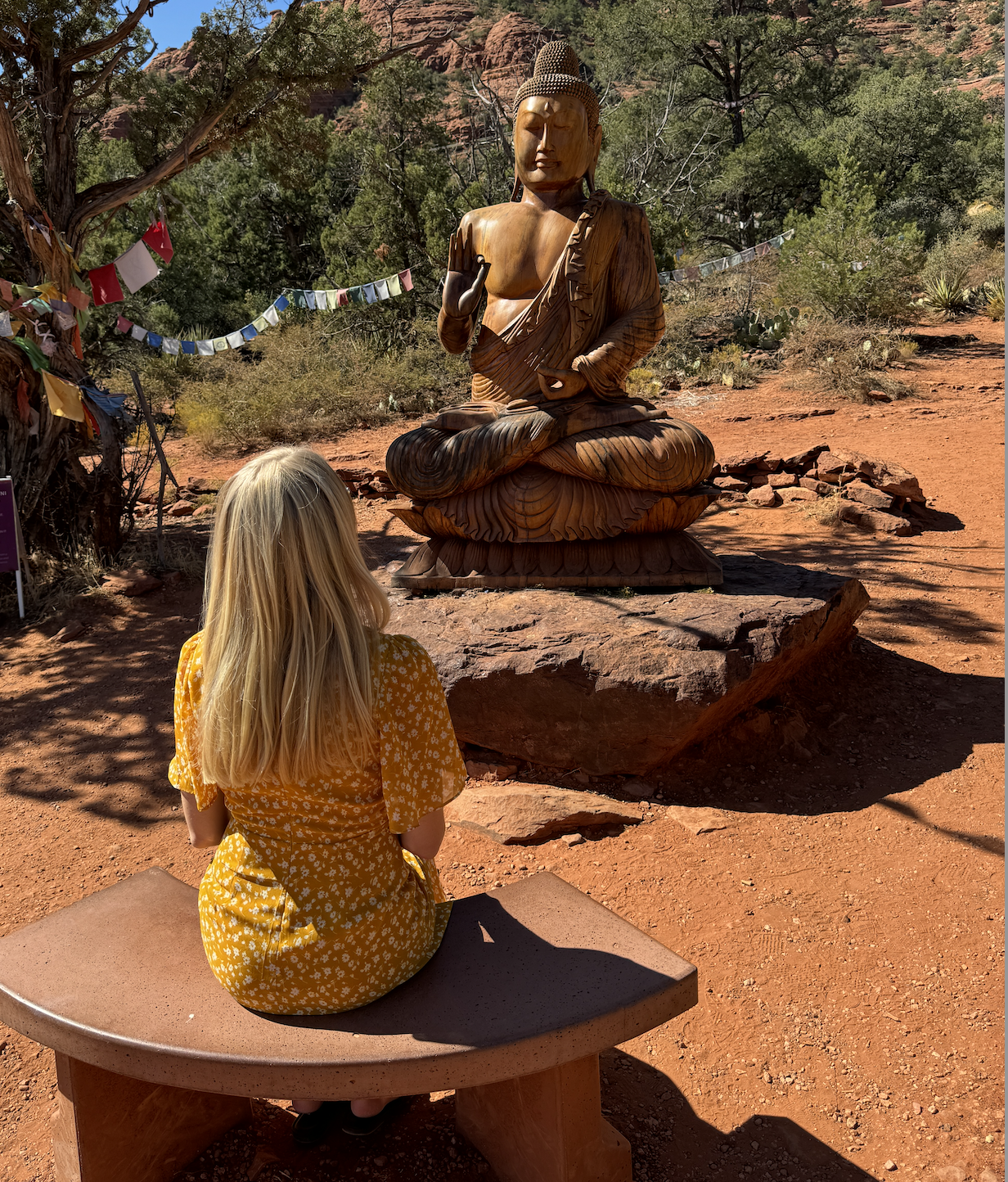
On The Other Side of Fear is Growth
I never expected the biggest roadblock in my life would also become the one that helped me grow the most. You’ve probably heard the phrase, “On the other side of fear is growth.” That couldn’t be more true for what I’ve experienced.
As much as I could focus on the terrifying parts of this story, I’ve chosen instead to live each day the best I can. Because I was diagnosed with a disease that doesn’t show on the outside and that makes it incredibly hard to explain. Have you ever had a dream where you’re screaming but no one hears you? That’s what this can feel like. You’re trying to make the world understand that this disease is real, it’s serious, it’s painful and yet the most common response is, “But you don’t look like someone with high cholesterol.” Since when did illness have to look a certain way?
When I first started telling people about my diagnosis, I felt like they were going to say, “I hope you feel better,” as if I had a cold. I didn’t know how to talk about it. Honestly, I think I kept it surface-level because I was still trying to understand it myself. Even now, seven years later, I still struggle to find the words. Even writing this blog post, I have debated to share the realness of it because it feels as though I am sharing someone else’s story.
Understanding Familial Hypercholesterolemia (FH)
Let me explain what this disease actually is and how it has affected me personally. I was diagnosed with a genetic disorder called Familial Hypercholesterolemia, or FH for short. It affects about 1 in 250 people and causes dangerously high cholesterol levels starting from birth. People with FH carry a mutation in one of the genes responsible for how the liver clears LDL the “bad” cholesterol from the bloodstream.
Someone that doesn’t have FH, the liver uses special receptors to pull LDL cholesterol out of the bloodstream and remove it. But in people with FH especially with my specific mutation those receptors don’t work properly. My liver simply can’t clear cholesterol the way it should. So even though I eat healthy, stay active, and live a clean lifestyle, cholesterol has been building up in my arteries since the day I was born.
The type of FH I have is heterozygous FH, which means I inherited one faulty gene. My genetic testing revealed a pathogenic mutation called c.820delA “pathogenic” meaning it is medically proven to cause disease. This one small deletion in my genetic code is the reason why my LDL and ApoB are extremely high. These aren’t numbers caused by a poor diet, they’re the result of something I was born with.
The scariest part? Most people with FH don’t know they have it until it’s too late. It’s often called a silent disease because you can look and feel completely fine until an event can happen at an early age. Without treatment, FH increases the risk of early heart disease by 20 times. It’s a lifelong, progressive condition that demands serious attention.
I’ve learned not to let people’s comments like “You don’t look like someone with high cholesterol” minimize what I’m facing. This journey has brought up emotions I never expected: frustration, confusion, fear. It’s put me in some of the most vulnerable conversations I wasn’t prepared to have. Being vulnerable isn’t easy for me, and yet I was given something that forces me to live in a constant state of it. Ironic, right? But despite all of it, I’ve chosen to live a life with more joy, more grace, and more meaning. If you’ve ever spoken to someone who’s faced a serious illness, they’ll often tell you they see life through a completely different lens after their diagnosis. That’s what FH has done for me. It has challenged me but it’s also given me clarity about what really matters.
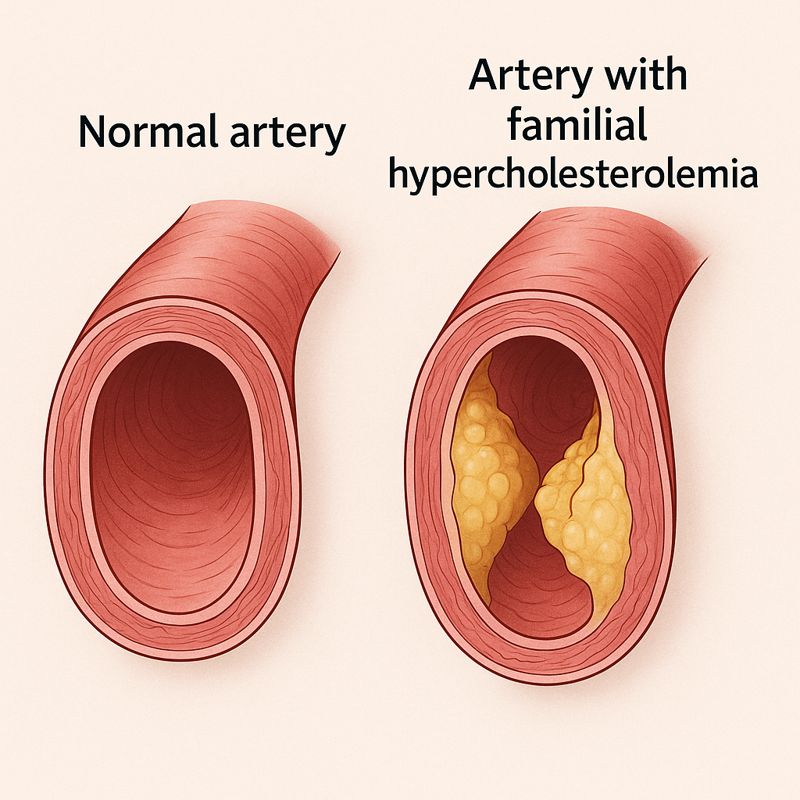
This is what happens inside your arteries when LDL and ApoB are chronically elevated cholesterol builds up into harmful plaques that narrow blood flow and raise risk of heart attack and stroke.
Moment’s That Change You
There are moments in life that alter you forever, this was one of them. About a year before my FH diagnosis, my dad had a heart attack. It was a complete shock. At the time, I didn’t realize how strong our family history was: heart attacks and strokes on both sides, yet I never connected the dots.
On June 29, I was flying to North Carolina a few days before my dads arrival to surprise him. He was scheduled to babysit my brother’s kids while my brother went on a birthday trip. Ironically, June 29 is my husband’s birthday, a connection I noticed only later, one of those strange nudges life gives you. While waiting to board, I suddenly felt nauseous in an extreme way. I didn’t think I could make it on the flight. I called my mom and told her I didn’t feel right as this feeling came on suddenly. That’s when she told me, “Your dad had a heart attack and is being rushed to the hospital.” The gut feeling I couldn’t explain finally made sense.
Thankfully, he survived and got into surgery quickly. But seeing my dad, the strongest man I knew, in that hospital, changed me. You grow up believing your parents are invincible, especially your dad. That moment shattered that illusion. After surgery, a nutritionist gave him pages of dietary changes. No high sodium and strict fat limits. I took it seriously, probably more than he did. I wanted to help, to fix it, to make sure he never ended up there again. But people have to choose their own path and I learned that the hard way.
What shocked me was that no one, not even the cardiologist asked about our family history. My dad’s dad had a triple bypass, his brother had multiple heart attacks, his grandfather died from one. Had they asked, maybe someone would’ve looked into genetic causes like FH. Maybe I would’ve been tested sooner and my brothers.
That moment wasn’t just about my dad’s heart, it was a preview of my own story unfolding.

Following Intuition Saved My Life
Believe it or not, you can have an intuition about your health. Whether you choose to follow it or not, it is important to take steps to understand your body. I had never thought about having my cholesterol lipids checked. I have always been fit, and especially after learning about my dad’s list of nutrition changes, I started to pay attention to it. I had been dealing with some health challenges, and I figured it was hormonal. A health coach told me to also get my cholesterol checked simply due to being at the age where I should know what my numbers are. What came next wasn’t something I ever expected.
My results came back as a shock. To paint a picture, my total cholesterol was 400 (normal range is 100–199), and my LDL (bad cholesterol) was 275 (normal range is 0–99). How could this be? I was referred to a cardiologist at Swedish Hospital. After reviewing my labs and asking about my family history, the doctor took one look at me and said, “You don’t look like you have high cholesterol”. That was the beginning of what judgment looks like with FH, and I have faced it more times than I care to admit.
Getting Diagnosed Without Support
The cardiologist decided to order a genetic test from Ambry Genetics so I could be tested for a disease called Familial Hypercholesterolemia. She didn’t explain what this meant, and I didn’t really ask any questions. I didn’t think I would have some kind of genetic disease. Waiting for these results was a strange feeling. What exactly would it mean if I had this? I don’t remember telling many people about the test or even having a conversation with my family. I have learned that when dealing with hard things, I just have to face them and see what comes of it.
When the cardiologist asked me to come to her office to give the results, I knew it wasn’t good. The results came back positive for heterozygous familial hypercholesterolemia. The attention quickly shifted because she became emotional and started to cry. Looking back, that moment was not appropriate. If she couldn’t handle delivering the results, she should have asked someone else to do it. Let me explain why this matters. When you are given results that change the direction of your life, you want to be supported, not put in a position where you’re consoling your doctor or redirected to fear.
Most importantly, she didn’t explain what the diagnosis meant or gave me any resources. There has to be a better way to be taken care of in moments like this. I want others to have a better experience because the bedside manner in this case was unbelievable.
The Journey of Treatment
The first course of action was to be prescribed a medication called a statin, which is widely used to reduce LDL. There are different doses and types of statins. The only thing my Dr. said to me “You have to be on this the rest of your life,” and that I needed to continue getting my lipids tested.
After six months, my LDL levels showed no change. The doctor asked, “Have you been taking it every day?” I hadn’t missed a single dose. She was baffled and increased the dose, telling me we’d test again in a year. Instead of questioning me, she should have explored why my body wasn’t responding to a pretty strong medication.
What she didn’t explain was that FH is a genetic mutation that causes cholesterol to build up in the blood. Diet and lifestyle have a small impact, but they still matter for overall health. There was no aggressive discussion about other medications that might help. Over the years, I tried various statins and other medications, but my body seemed to reject them all. I have gone through a series of doctors, experienced terrible encounters with doctors, mistreated in a way that I would never expect, and didn’t stop searching for the right support. I can confidently say I have the right care team in place today. I was never going to settle again.

When Specialist Miss The Signs
If the medical system truly understood Familial Hypercholesterolemia, many more people could be diagnosed far earlier.
Since my early twenties, I thought I was dealing with acne, these persistent white bumps on my cheeks that never went away. But they weren’t acne. They were xanthomas, specifically a type known as xanthelasma when they appear on the face. These are cholesterol deposits under the skin and can be an early red flag for FH. If estheticians and dermatologists were better educated to recognize these signs, many people could be diagnosed sooner. I always wondered why these bumps kept coming back and why nothing worked. It’s because it wasn’t a skin condition. It was a metabolic one.
A few years after my diagnosis, I began experiencing severe pain in my Achilles tendon, so intense I could barely walk up the stairs. I used to ride horses, but the pain made it impossible to wear boots. After spending thousands of dollars at a podiatrist for laser treatments, I finally dug deeper into Google. I searched, “Does FH cause Achilles issues?” I didn’t expect a connection. We’re told FH has no symptoms until a heart attack or stroke. But that isn’t true.
FH can cause cholesterol deposits in tendons, especially the Achilles. These are called tendon xanthomas and can cause inflammation and chronic pain, often before heart symptoms appear. Persistent Achilles pain can be an early warning sign, and doctors should check cholesterol levels in patients who present with it.
So why didn’t the specialist know this? I had already been diagnosed and specifically shared this in my chart. This should be common knowledge, but awareness is still far too limited, even among specialists.
When Your Body Rejects Medication
Over the years, my body has battled multiple medications, causing severe side effects, some of which landed me in the hospital. I finally reached a breaking point. After digging deeper I had another extensive genetic testing done and the results came back as Statin-induced myopathy, which refers to muscle problems caused by statin medications, which are commonly prescribed to lower LDL cholesterol. It’s a known side effect, especially in people with underlying genetic risks or high-dose statin use. This explains why I experienced what I did, and it wasn’t for any other reason. There comes a point when quality of life becomes the priority. I am hopeful there will be a treatment in the future that is right for me.
Today, I focus on a holistic approach. Whether it dramatically reduces my LDL on paper or not, I know I’m living in a way that supports my health. I focus on nutrition, fitness, not drinking alcohol, riding my bike, meditation, and finding joy in the small things. There is no cure for FH today, but I believe that loving my life is part of my healing.
We can’t change our genetics, but we can control how we choose to show up each day. I have made peace with this disease, it has changed the way I think about the rest of my life, how I carry forward, and being real about it. I don’t remember telling many people about this disease when I was diagnosed. I did lose a few close friends during that time, I completely changed my entire lifestyle after this that didn’t align for others. I believe I didn’t understand the severity of this disease until treatments were showing signs it wasn’t working and meeting others that have FH shined a light on the reality.
Make Something Meaningful
I have come a long way and am driven to live a fulfilling life. Always trust your intuition, If something doesn’t feel right, you are probably right. Don’t let a doctor or someone say “you look healthy” make you overlook what you should pay attention to that could save your life.
I know that for some people with FH, it has brought the loss of parents, siblings, even children to this disease. FH can be silent and devastating, and not everyone has the chance to find it early or can tolerate medications.
I’ve chosen to make something meaningful out of something I didn’t choose. If this story reaches even one person who finds answers sooner because of it, that’s worth everything. All I ask is that you share this with someone, you never know who may be silently living with this disease undiagnosed, unheard, and at risk.
Xo, Chantelle





Thank you for sharing your story. It resonates with me as I have similar feelings and experiences as the ones you mentioned. It’s a hard diagnosis to live with. We are juggling physical health concerns, the toll it has on our mental health, the desire to raise awareness and make changes while at the same time wanting to live a life where this doesn’t define who we are and moving forward as best we can. It’s a tough balance. Your words are beautiful. Always here if you need to talk or vent!